
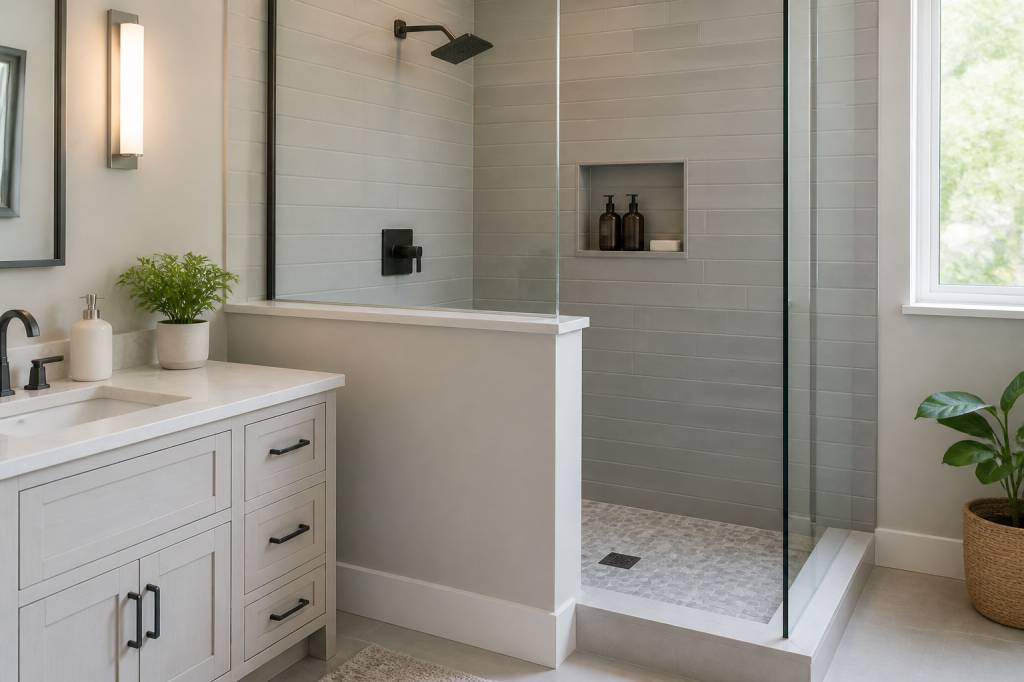
What a shower knee wall actually does
A shower knee wall is that short partition you see in many walk-in showers, usually built to define the shower space without closing it off completely. It can support a glass panel, help separate the wet zone from the rest of the bathroom, and add a clean architectural line to the design. Done well, it makes a bathroom feel custom. Done poorly, it becomes a splash zone with a plumbing problem attached.
If you’re planning a new shower or renovating an existing one, the height of the knee wall matters more than many people think. Too low, and water escapes or the glass looks awkward. Too high, and the shower can feel boxed in. The sweet spot depends on function, glass size, fixture placement, and code requirements.
What is the ideal knee wall height for a shower?
In most bathroom projects, a shower knee wall is built between 36 and 42 inches high. That range works well for supporting glass panels, creating separation, and keeping the shower open visually.
Here’s the practical breakdown:
- 36 inches is a common minimum for a knee wall that supports a glass panel and still feels low and open.
- 42 inches offers a bit more privacy and splash protection while still looking light and modern.
- 48 inches and above can work in certain layouts, but at that point the wall starts acting more like a full divider than a true knee wall.
If you ask ten contractors for the “right” height, you’ll probably get ten slightly different answers. That’s because the best height depends on what the wall is supposed to do. A knee wall behind a fixed glass panel may be taller than one that simply frames a walk-in opening. A shower next to a tub or vanity may need a different height than a fully enclosed corner shower.
A good rule of thumb: build the wall tall enough to support the glass and stop direct spray, but not so tall that it blocks light or makes the shower feel cramped.
Factors that affect the right height
Choosing the height isn’t just about preference. It’s a balance of layout, plumbing, waterproofing, and how the shower will actually be used every day.
Glass panel height and stability
If the knee wall supports a glass panel, the wall height should coordinate with the glass system. Many frameless shower enclosures use glass panels that sit on top of the knee wall and rise to around 60 to 78 inches above the finished floor. The wall itself only needs to provide a stable base, but it must be structurally solid enough to hold the glass anchor or bracket.
That means the wall framing and top cap matter just as much as the height. A wobbly wall is not a design feature. It’s a callback waiting to happen.
Showerhead location
Where the showerhead is installed plays a huge role. A rain shower positioned well away from the knee wall may need less height than a standard wall-mounted showerhead aimed directly toward the opening. If water is likely to hit the glass or wall repeatedly, a taller knee wall can help reduce splash.
If the showerhead is close to the knee wall, don’t guess. Stand in the shower footprint and imagine the spray path. Better yet, have someone hold a garden hose at shower height during layout planning. It sounds a little odd, but it works surprisingly well for visualizing splash zones.
Privacy needs
In a shared bathroom, the knee wall height also affects privacy. A 36-inch wall keeps the space open but offers limited visual screening. A 42-inch wall gives a little more privacy without closing the design. If the shower is visible from the bedroom or vanity area, that extra few inches may matter a lot more than it seems on paper.
Bathroom size and ceiling height
Small bathrooms usually benefit from a lower knee wall because it preserves sightlines and makes the room feel larger. In a spacious primary bath with high ceilings, a slightly taller wall may look more proportionate and polished.
The important part is visual balance. A knee wall that looks too short in a large room can feel lost. A wall that’s too tall in a compact bathroom can make the whole layout feel heavy.
Typical dimensions beyond height
Height gets most of the attention, but the other dimensions matter too. A knee wall that’s too narrow, too shallow, or poorly capped can cause long-term problems.
- Wall thickness: Finished thickness is often around 4 1/2 to 6 inches, depending on framing, backer board, waterproofing, tile, and cap material.
- Top width: The top should be wide enough to create a stable cap, especially if glass hardware will be mounted there. A stone or solid-surface cap is common.
- Length: Common lengths vary widely, from 24 inches to 60 inches or more, depending on the shower design.
As a practical example, a knee wall that is 40 inches high, 5 inches thick, and 36 inches long can work beautifully in a walk-in shower with a fixed glass panel above it. That same wall, if built without proper waterproofing or bracing, can cause leaks or movement issues later. Short walls are not “simple” just because they’re short.
Design tips for a better-looking shower knee wall
A shower knee wall is one of those small elements that can make a bathroom feel custom if it’s handled well. Here are a few design choices that make a real difference.
Match the cap to the rest of the bathroom
The top of the knee wall gets attention, especially if it’s visible from the room. A natural stone cap, quartz slab, or solid-surface piece creates a finished look and protects the wall from water. Tile can work too, but a single solid cap is usually easier to clean and less likely to collect water at grout joints.
If the bathroom has warm tones, a matching stone cap can tie the shower into the overall design. If the room is modern and clean-lined, a sleek quartz top usually looks better than a heavily patterned tile edge.
Use the wall to frame the shower entrance
A knee wall can do more than stop splashes. It can create a visual entrance to the shower, almost like a subtle doorway without a door. This is especially useful in walk-in showers where the goal is to make the bathroom feel open and airy.
A well-placed wall can also help hide plumbing fixtures from the main view. That small bit of concealment makes the space feel more refined and less like a utility box with tile on it.
Think about niche placement early
If you want a shower niche, bench, or shampoo shelf, plan them before framing the wall. The knee wall affects how water moves, how tile lines up, and how the overall composition reads. For example, a niche placed too close to the top of the knee wall can look cramped. A bench that competes visually with the wall can make the shower feel cluttered.
Good shower design is often about restraint. The fewer awkward cuts and odd transitions, the better the space will look.
Keep the proportions clean
If the knee wall is low, avoid making it visually bulky. Heavy trim, oversized caps, or thick decorative edges can make it look clumsy. If the wall is taller, make sure it’s proportionate to the rest of the shower opening and the glass panel above it.
As a general design principle, the wall should feel like part of the shower, not a random block added at the last minute because “we needed something there.”
Code considerations you should not ignore
Building codes can vary by location, so always verify local requirements with your municipality or a licensed contractor. That said, there are several common code and safety considerations that apply to shower knee walls.
Waterproofing is mandatory
A shower knee wall must be fully waterproofed, not just tiled. Water will find its way into seams, corners, and screw penetrations if the assembly is not properly sealed. A waterproof membrane, correctly installed backer board, and sealed transitions are essential.
One common mistake is treating the knee wall like a decorative half-wall. In a shower, it is part of the wet area and must be built like one. If the waterproofing fails, the damage may not show right away. By the time it does, the repair is usually much more expensive than doing it right the first time.
Structural support for glass
If the wall carries glass, it needs enough structural backing to handle the load. That often means solid blocking inside the framing where brackets or hinges will attach. Do not rely on tile and thin substrate alone to hold heavy glass panels.
Glass installers often have their own requirements for wall strength, anchor placement, and acceptable tolerances. Follow those specifications carefully. A beautiful wall is not useful if the glass contractor refuses to install on it.
Minimum shower clearances still apply
Even with a knee wall, your shower must still meet local minimum size and clearance rules. In many places, a shower compartment must provide enough floor area and proper access. The wall should not create an opening that is too narrow or a layout that is difficult to use safely.
For example, if the knee wall forms part of a walk-in shower entrance, make sure the remaining opening is comfortable for entry and exit. A stylish opening that feels like a sideways gymnastic maneuver is not ideal for daily use.
Electrical and plumbing rules
If the wall contains plumbing lines, valves, or nearby electrical components, those elements must be installed according to code. Shower controls should be placed at a usable height and location, and any electrical fixtures in the bathroom must respect wet-area clearance requirements.
If you are building a shower in a remodel, check the wall cavity carefully before framing. Old plumbing, vents, or hidden wires can change what is possible without major rework.
Common mistakes to avoid
Many shower knee wall problems come from rushing the planning stage. Avoid these common issues:
- Building the wall before deciding on the glass size and hardware.
- Skipping proper waterproofing because “it’s only a short wall.”
- Forgetting solid blocking where glass brackets will attach.
- Making the wall too tall for a small bathroom.
- Choosing a top cap that is narrow, absorbent, or hard to clean.
- Ignoring the showerhead spray pattern during layout.
Another frequent mistake is failing to coordinate tile layout with the wall height. A knee wall height that lands awkwardly in the middle of a tile pattern can create unnecessary cuts and a disjointed look. When possible, set the height with tile dimensions in mind. That small planning step can make the finished shower look far more intentional.
When a knee wall is better than a full wall or glass enclosure
A knee wall is not the right solution for every bathroom, but it shines in certain situations. It works especially well when you want partial separation without losing natural light or openness.
- Open walk-in showers: Great for a modern spa-like feel.
- Small bathrooms: Helps define space without making the room feel boxed in.
- Primary bathrooms: Adds a custom look and pairs well with frameless glass.
- Shared bathrooms: Provides a bit more privacy than an all-glass layout.
If your household prefers low-maintenance cleaning, a knee wall can also reduce the amount of glass you need, which means fewer water spots to wipe down every week. That may not sound glamorous, but it matters once the honeymoon with your new bathroom wears off and reality sets in.
Practical takeaway for planning your shower
If you want a simple starting point, aim for a shower knee wall height of 36 to 42 inches, then adjust based on the shower layout, glass design, privacy needs, and local code requirements. Keep the wall structurally strong, fully waterproofed, and visually balanced with the rest of the bathroom.
The best knee wall is one that disappears into the overall design while quietly doing its job. It should manage water, support the glass, and make the shower feel more polished—not call attention to itself for the wrong reasons.
When in doubt, sketch the whole shower setup before framing begins: wall height, glass height, showerhead location, niche placement, and finished tile lines. A few extra minutes of planning can save a lot of patchwork later. And in bathroom remodeling, patchwork is rarely the style anyone was aiming for.