
Planning a Functional Laundry Room in a New Build
A well-designed laundry room can make everyday household tasks faster, cleaner, and far more efficient. In a new build, this space has a major advantage: it can be planned from the start rather than adapted later. That means the laundry room layout, plumbing, electrical placement, ventilation, and storage can all work together from day one.
For many homeowners, the laundry room is no longer a forgotten utility area. It is now a practical workspace that often serves multiple purposes. It may be used for sorting clothes, storing cleaning supplies, folding laundry, managing pet care, or even handling mudroom-style drop zones. A functional laundry room design should support all of these tasks without feeling crowded or disorganized.
Choose the Best Laundry Room Location
Location is one of the most important decisions in a new build laundry room design. The right placement can reduce effort and improve daily workflow. Many homeowners choose a location near bedrooms, which makes carrying clothes baskets much easier. Others prefer a laundry room close to the garage or mudroom, especially in homes where the laundry space doubles as a transition area for shoes, coats, and sports gear.
Placing the laundry room near bedrooms is often convenient for families. It shortens the distance between dirty clothes and the washer. This can make laundry feel less like a chore. On the other hand, a laundry room near the garage can be useful for handling muddy clothing, pet items, and outdoor towels before they enter the main living areas.
In some new construction floor plans, the laundry room is positioned on the second floor. This can be practical for homes with most bedrooms upstairs. It also helps keep laundry supplies and chores contained near where they are most needed. The best location depends on your household habits, the home layout, and how much traffic the room will receive.
Design the Right Laundry Room Layout
A functional laundry room layout should allow easy movement between sorting, washing, drying, folding, and storing. Even in a small laundry room, the arrangement of appliances and surfaces can make a large difference. Good laundry room planning means thinking about workflow before choosing finishes.
Common layouts include side-by-side washer and dryer placement, stacked laundry appliances, or a galley-style arrangement with counters on one or both sides. Side-by-side units often provide room for a countertop above or adjacent to the machines. This creates a useful folding station. Stacked washer and dryer units are ideal for compact laundry rooms because they save floor space and leave room for cabinets or a sink.
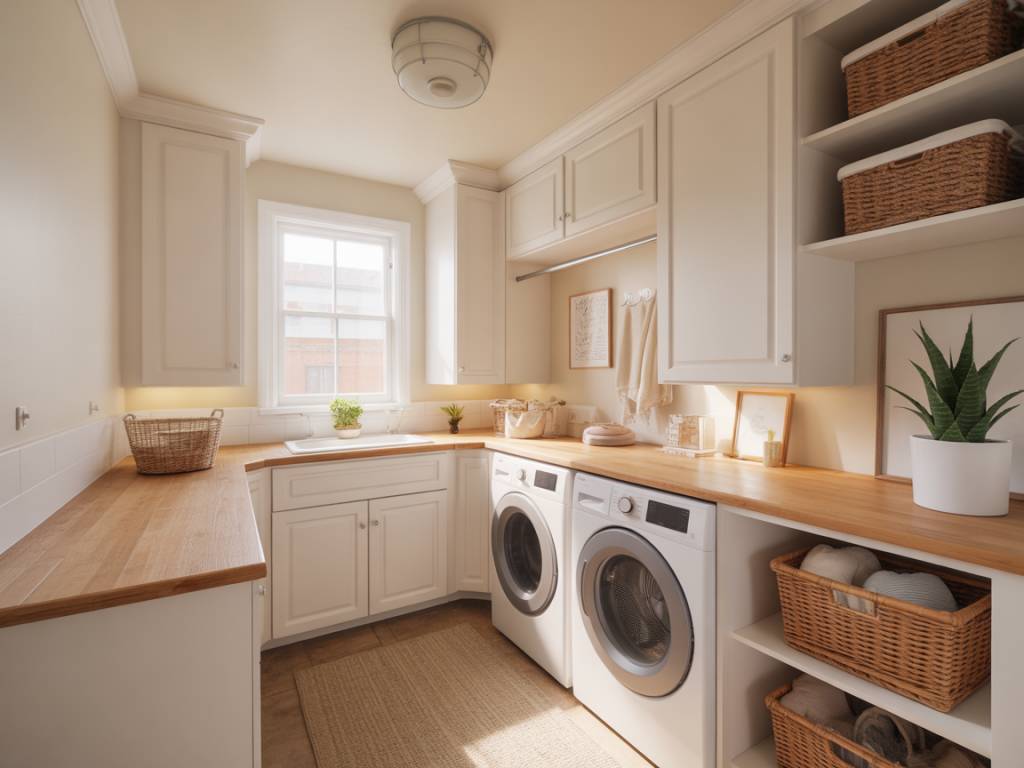
If the new build allows more square footage, a U-shaped laundry room design can be especially efficient. This layout can provide work zones for sorting, washing, folding, and storage. It creates a clear sense of order. The room feels more intentional and less utilitarian.
- Keep enough clearance around appliances for doors to open fully.
- Allow space for laundry baskets and temporary sorting bins.
- Plan a clear path for moving clothes from washer to dryer.
- Include landing space for folded items and detergent containers.
- Make sure plumbing and electrical locations match the appliance layout.
Include Smart Laundry Room Storage
Storage is essential in a functional laundry room. Without it, detergent, hangers, stain removers, dryer sheets, and cleaning tools can quickly create clutter. In a new build, built-in storage can be integrated neatly into the wall layout. This creates a cleaner appearance and better long-term organization.
Upper cabinets are a classic choice for laundry room storage. They keep chemicals and supplies out of reach of children and free up counter space. Open shelving can also work well if the goal is easy access. It gives the room a lighter look, though it requires more visual organization. Tall pantry-style cabinets are useful for storing brooms, mops, vacuum attachments, ironing boards, and bulk items.
Drawer storage is another useful option. Deep drawers can hold folded towels, cleaning cloths, and laundry accessories. Pull-out hampers or built-in sorting bins are helpful for separating lights, darks, delicates, and towels before washing. This improves efficiency and reduces mess.
- Install cabinets above the washer and dryer for detergent and supplies.
- Use labeled bins for sorting laundry by color or fabric type.
- Add hooks for hangers, reusable bags, and drying accessories.
- Consider a broom closet or tall utility cabinet if space allows.
- Use baskets or containers to keep small items organized.
Add a Countertop for Folding and Sorting
A countertop is one of the most valuable features in a modern laundry room. It provides a flat work surface for folding clothing, sorting items, and pre-treating stains. In many homes, this becomes the main functional area of the room. A durable, easy-to-clean material is usually the best choice.
Countertops can be installed above side-by-side front-load washers and dryers or along a separate wall if the layout allows. Quartz, laminate, and solid surface materials are common because they are practical and resistant to everyday wear. If the laundry room is also used for crafts, pet care, or household paperwork, the counter becomes even more valuable.
The height of the countertop should be comfortable for folding clothes. It should also allow enough space beneath for appliances and storage if needed. In a new build, this can be tailored to the homeowner’s preferences instead of adjusted later.
Plan for a Laundry Room Sink
A utility sink can significantly improve laundry room functionality. It is useful for handwashing delicate items, soaking stained clothing, rinsing muddy shoes, and cleaning tools. In a busy household, the laundry room sink often becomes one of the most versatile fixtures in the home.
For new construction, it is best to plan plumbing for the sink early in the design process. This helps avoid costly changes later. The sink can be a simple deep basin or a more finished style that complements the cabinetry and countertop. Some homeowners prefer a sink with a pull-down faucet for added flexibility.
If the laundry room is near an exterior entry, the sink can also serve as a cleanup station after gardening, sports, or outdoor work. This adds convenience and helps protect the rest of the home from dirt and debris.
Use Proper Lighting and Ventilation
Lighting often gets overlooked in laundry room design, but it has a direct impact on usability. A bright laundry room makes stain removal, sorting, and folding easier. Natural light is ideal if the room has a window, but it should be supported by layered artificial lighting as well.
Ceiling lights provide overall illumination. Under-cabinet lighting can help when folding clothes or reading product labels. If the room has a countertop or sink, task lighting can improve visibility in those work areas. A well-lit laundry room also feels cleaner and more welcoming.
Ventilation is equally important. Laundry appliances generate heat and moisture, especially dryers. Good ventilation helps prevent humidity buildup, which can lead to odors or damage over time. A properly vented dryer, exhaust fan, or even a window can support a healthier laundry room environment. In a new build, this should be addressed during the design stage rather than after move-in.
Select Durable Materials and Finishes
Because laundry rooms are high-use utility spaces, durable materials matter. Floors should be easy to clean and resistant to moisture. Tile, luxury vinyl plank, and sealed concrete are common choices in new build laundry rooms. These materials stand up well to spills, heavy foot traffic, and appliance vibration.
Wall finishes should also be practical. Washable paint is a smart option because laundry rooms can get dusty or damp. Backsplashes behind sinks and countertops can protect walls from splashes and stains. Cabinet finishes should be selected for durability as well as appearance.
Homeowners often want a laundry room that feels connected to the rest of the house. That is possible without sacrificing function. Neutral colors, clean lines, and coordinated hardware can make the room look polished while still serving a practical purpose.
Think About Energy-Efficient Appliances and Smart Features
New builds are the ideal time to consider energy-efficient laundry appliances. Modern washers and dryers often use less water and electricity than older models. This can reduce utility costs over time. It can also support a more sustainable household.
Smart washers and dryers are increasingly popular in new homes. Some offer cycle notifications, remote monitoring, and customized wash settings. These features can improve convenience, especially for busy families. While technology should not replace good layout planning, it can add meaningful value to a well-designed laundry room.
When selecting appliances, make sure the room has the correct hookups, electrical capacity, and venting. Appliance dimensions should also be verified early. A beautiful laundry room loses much of its value if the machines do not fit properly.
Make the Laundry Room Work for Daily Life
The most functional laundry room is one that matches the way the household actually lives. Some families need space for sports uniforms and school clothes. Others want a pet washing area, hanging rod, or dedicated drying rack. In many new builds, the laundry room can serve more than one role if it is planned carefully.
Think about the tasks that happen most often. Sorting. Washing. Drying. Folding. Storing. Hanging. Pre-treating. Each one should have a place in the room design. Small details matter. A wall-mounted drying bar, a fold-down ironing board, or a hidden hamper can dramatically improve usability.
A functional laundry room in a new build should feel efficient, organized, and easy to maintain. It should support the daily rhythm of the household without creating extra work. When the location, layout, storage, lighting, and materials are all considered together, the result is a laundry room that performs well for years.