
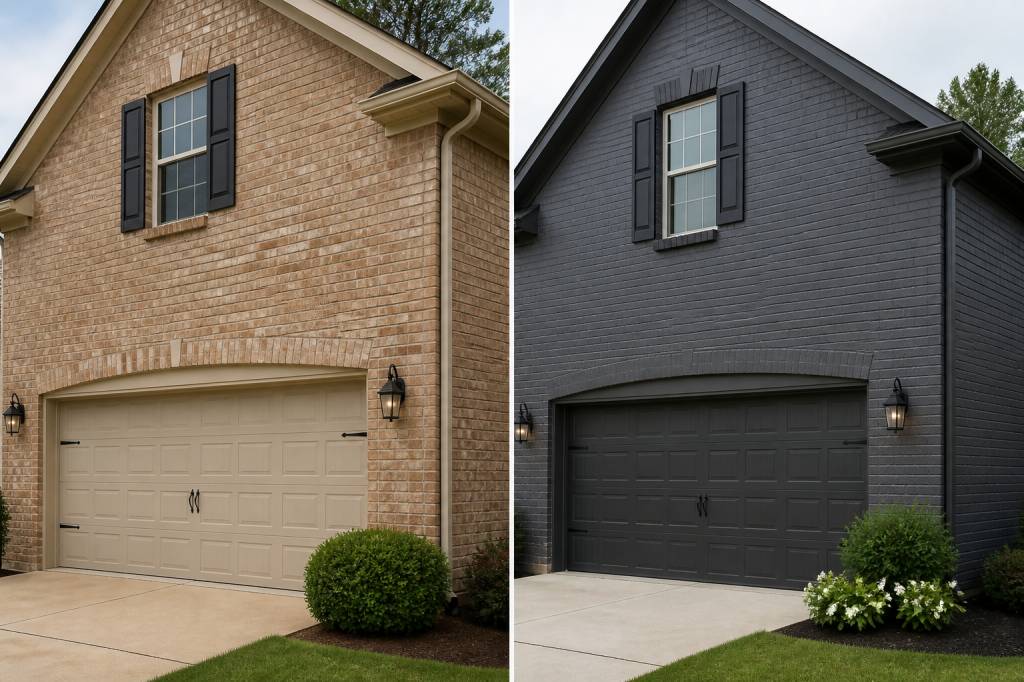
Brick staining vs. painting: what’s the real difference?
If you’re looking at a tired brick exterior and thinking, “This house needs a reset,” you’re not alone. Brick is durable, but color can fade, mortar can look dated, and a home’s exterior can start to feel stuck in another decade. Two popular ways to refresh it are brick staining and brick painting. They may sound similar, but they behave very differently once they’re on the wall.
The short version: paint coats the surface, while stain penetrates the brick. That one difference changes everything—how the brick breathes, how long the finish lasts, how much upkeep you’ll need, and how natural the final result looks. If you’re trying to choose the best option for your home, the details matter.
How brick stain works
Brick stain is designed to soak into the porous surface of the brick rather than sit on top of it. Instead of creating a thick film, it changes the color while leaving the texture visible. Think of it like tinting the brick instead of dressing it in a new coat.
Because the stain penetrates, the surface still looks like brick. The natural variation, grain, and small imperfections remain visible, which is a big reason many homeowners like it. It tends to look more authentic and less “freshly covered up” than paint.
Another important point: high-quality brick stain is usually breathable. That means moisture can still move through the brick, which helps reduce the risk of trapped water. That matters a lot, especially on older homes where brick was never meant to be sealed under a heavy film.
How brick paint works
Paint works differently. It sits on the surface and creates an opaque layer that covers the brick’s original color. If you want a dramatic transformation—say, going from red brick to crisp white or charcoal gray—paint delivers that quickly and clearly.
The finish can be smooth, bold, and modern. Many homeowners like the clean look because it can make an older house feel updated in a single weekend. But because paint forms a surface layer, it can also peel, chip, or trap moisture if the prep work isn’t perfect. And on brick, prep work is not optional. Brick is not a forgiving material. It remembers everything.
Appearance: natural character or full coverage?
This is usually where the decision starts. Do you want the brick to look refreshed, or do you want it to look completely reinvented?
Brick stain is the better choice if you want to preserve texture and variation. It gives a softer, more organic result. The final effect often depends on the natural brick beneath, so no two walls look exactly the same. That can be a strength. It feels custom, not factory-made.
Paint is better if you want total color control. You can cover inconsistent brick tones, patchy repairs, and outdated red or orange brick with one uniform finish. If your goal is a modern, high-contrast exterior, paint is usually the faster route to a clean visual reset.
Here’s a simple way to think about it:
- Choose stain if you want the brick to still look like brick.
- Choose paint if you want the brick to become a blank canvas.
Durability and long-term performance
On paper, both products can last a long time. In the real world, the winner depends on application quality, climate, and how much maintenance you’re willing to do later.
Brick stain often has the edge for longevity because it penetrates rather than peels. Since it doesn’t form a thick surface layer, it is less likely to flake off in sheets. That makes it appealing in wet, humid, or freeze-thaw climates where moisture movement is a concern.
Paint can also hold up well, but only if the brick was properly cleaned, dried, primed, and coated with a masonry-compatible product. If any moisture gets trapped behind the paint, problems can start. You may see bubbling, cracking, peeling, or efflorescence showing through. Once that happens, the repair work can become a bit of a headache. And by “a bit,” we mean the kind that involves scrapers, ladders, and mild regret.
If you want a finish that ages gracefully, stain is often the safer bet. If you want the boldest visual change and are ready to maintain it over time, paint can still be a solid choice.
Breathability matters more than people think
Brick is porous. It absorbs and releases moisture. That’s one reason brick homes can last for generations when they’re treated properly. The problem starts when the surface is sealed in a way that blocks moisture from escaping.
Brick stain is generally more breathable than paint. That makes it a better option for older masonry, homes with existing moisture issues, or any wall that gets hit by rain and humidity regularly. Breathability helps reduce pressure inside the brick and mortar, which can protect the structure over time.
Paint can still be used on brick, but it requires more caution. If the wall already has moisture problems, paint can make them worse by trapping water inside. Before painting brick, it’s smart to inspect for cracks, damaged mortar, drainage issues, and signs of dampness. Fix the source first. Cosmetic upgrades should not be used to hide a water problem. That’s how small issues become expensive ones.
Maintenance: what are you signing up for?
Maintenance is one of the biggest practical differences between the two options.
With stain, maintenance tends to be simpler. Because it fades gradually rather than peeling, it can often be refreshed without stripping the whole surface. A properly applied stain can last many years with minimal fuss, depending on exposure and product quality.
Paint usually requires more upkeep. Over time, it may chip, fade, chalk, or peel. Touch-ups are possible, but matching an aged painted surface can be tricky. If you repaint later, you often need to deal with failing layers first, which adds time and labor.
If you’re the type who likes a low-maintenance exterior, staining is usually friendlier. If you don’t mind periodic repainting and like having full control over color changes, painting still works.
Prep work: the part nobody gets excited about
Whether you stain or paint, preparation is where the real work happens. The finish only performs as well as what’s underneath it.
For brick stain, the brick must be clean, dry, and free of efflorescence, mildew, dirt, and old coating residues. Any existing paint or sealer can interfere with absorption, so the condition of the wall matters a lot. Since stain needs to penetrate, it works best on bare, unsealed masonry.
For paint, prep is even more demanding. You need clean brick, sound mortar, proper drying time, and the right primer or bonding system if the product requires one. Cracks should be repaired, loose mortar repointed, and stains removed as much as possible. The better the prep, the better the paint film will adhere.
Skipping prep is like painting over dust on a floor and hoping it becomes a rug. It won’t.
Cost: stain vs. paint
Cost depends on the size of the project, the condition of the brick, and whether you’re hiring a pro or doing it yourself. In general, painting can be cheaper upfront, especially if you’re going with a standard exterior masonry paint and doing the work yourself.
Brick stain may cost more per gallon and can require more care in application, but it can save money over time if it reduces maintenance and lasts longer. It may also be the better long-term value if you want to avoid future peeling and full repainting cycles.
When comparing costs, look at more than the initial invoice:
- Surface preparation
- Product quality
- Labor time
- Future maintenance
- Potential repair costs if moisture becomes trapped
A cheap paint job can become an expensive do-over. A well-applied stain may cost a bit more now but save you from future headaches.
Which option is better for older brick homes?
If your house is older, the answer often leans toward staining. Older brick tends to be more porous and may already have years of moisture movement behind it. A breathable finish is usually the safer approach.
That said, not every older home is the same. Some have been painted before. Some have brick that was never meant to remain exposed. Some have been repaired with mismatched patchwork over the years. In those cases, paint may be the better aesthetic choice if the wall is already coated or if the brick condition is inconsistent.
A good rule: if the brick is in decent shape and you want to preserve character, stain is hard to beat. If the brick is heavily patched, discolored, or previously painted and you want a dramatic visual reset, paint may make more sense.
Which option works better for modern curb appeal?
For a sleek, modern exterior, paint tends to be the most popular choice. White painted brick, dark charcoal, and soft greige exteriors are common for a reason: they create sharp contrast and a cleaner architectural look.
But stain can also look modern, especially if you choose a muted tone that deepens the existing brick rather than hiding it. The result is often more subtle and sophisticated. It can modernize a home without making it look overdone or overly trendy.
If you’re trying to boost resale appeal, think about your neighborhood too. A bold painted finish may be perfect in one setting and too strong in another. Stain usually feels safer because it enhances without fully erasing the original material.
When to choose brick stain
Brick stain is usually the better option if:
- You want a natural, textured finish
- The brick is in good condition
- Moisture breathability is important
- You prefer low-maintenance performance
- You want to update color without hiding the brick character
It’s especially appealing for older homes, historic-style properties, or anyone who likes a more subtle transformation. If your goal is “better brick,” not “different material,” stain is likely your match.
When to choose paint
Paint is usually the better option if:
- You want complete color coverage
- The brick has uneven tones or many patch repairs
- You’re aiming for a bold design change
- You don’t mind periodic maintenance
- The brick has already been painted or is suitable for coating
Paint gives you the most dramatic before-and-after result. If you’ve been staring at outdated red brick for years and you want a clean slate, it can be very satisfying.
A practical way to decide
If you’re stuck between the two, ask yourself three simple questions.
First: do I want the brick to look natural or uniform? Natural points to stain. Uniform points to paint.
Second: does this wall need to breathe? If yes, stain usually has the advantage.
Third: am I choosing this for long-term simplicity or for a strong visual makeover? Simplicity points toward stain. Transformation points toward paint.
If you still can’t decide, take a step back and look at the house as a whole. Roofing color, trim, landscaping, and even the style of the windows all affect which finish will look best. A finish that looks great on a sample board may feel wrong once it’s on the full facade.
Final thoughts for homeowners
Brick staining and painting both have their place, but they are not interchangeable. Stain is the more breathable, low-profile option that keeps brick looking like brick. Paint offers stronger coverage and a more dramatic shift, but it asks for more careful prep and more future upkeep.
If your priority is preserving character and protecting the masonry, stain is often the smarter long-term choice. If your priority is a bold style change and you’re ready to maintain it, paint can deliver a great result.
In the end, the best option is the one that fits your home’s condition, your climate, and the look you actually want to live with for years—not just the one that looks good in a quick online photo. That’s the difference between a trendy fix and a solid home improvement decision.