
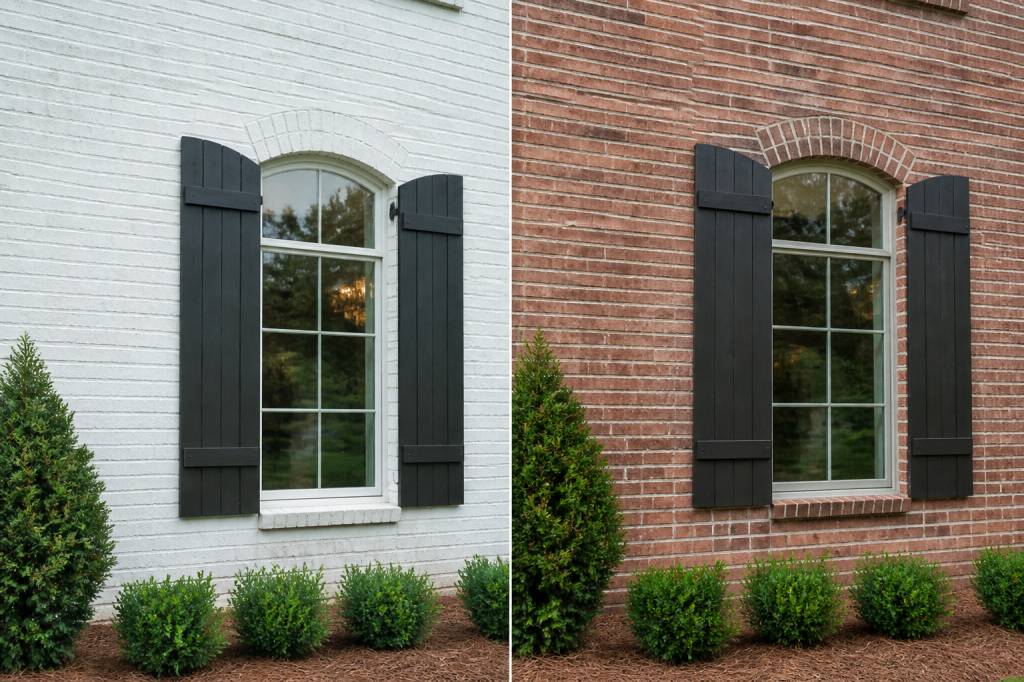
When it comes to updating the look of a brick exterior, two finishes usually come up first: paint and stain. Both can give tired brick a fresh new life, but they behave very differently once applied. And that difference matters more than most homeowners realize.
If you’re staring at an aging brick wall, fireplace, or façade and wondering which route to take, you’re not alone. The choice between brick paint and brick stain isn’t just about color. It affects maintenance, durability, moisture performance, and even how your home feels from the street. In other words, this is one of those decisions that looks simple until you start asking the practical questions. And yes, those questions are worth asking before you commit.
What is brick paint?
Brick paint is exactly what it sounds like: a coating applied on top of the brick surface to create a new color and finish. It forms a layer over the masonry, which means the original brick texture is partially hidden and the appearance becomes more uniform.
Paint is often chosen when homeowners want a dramatic transformation. A dated red brick house can become crisp white, charcoal gray, or even a bold modern black. If the goal is a complete style change, paint can deliver fast visual impact.
That said, paint sits on the surface. It doesn’t soak into the brick like stain does. That makes it more of a covering than a treatment, and that difference has consequences for longevity and moisture management.
What is brick stain?
Brick stain penetrates into the masonry instead of sitting on top of it. Rather than covering the brick, it changes the color while allowing much of the texture and natural variation to remain visible. The result is usually more subtle and more organic than paint.
This is a big reason many homeowners and contractors prefer stain for older brick homes. It tends to preserve the character of the original material while still refreshing the color. If paint is the dramatic makeover, stain is the careful facelift that keeps the home’s personality intact.
Stain also comes in several formulations, including semi-transparent and solid options. So if you want a darker, more consistent color without completely masking the brick, there’s usually a stain option that fits.
How paint and stain look on brick
Appearance is often the first thing people consider, and it’s easy to see why. Brick has a lot of visual texture, and the finish you choose will either emphasize or soften that texture.
Paint creates a more uniform surface. It can make brick look cleaner, newer, and more modern. This is ideal for homeowners aiming for a bright farmhouse look, a sleek contemporary exterior, or a more polished interior fireplace surround.
Stain, on the other hand, preserves more of the brick’s natural character. You’ll still see color variation, surface imperfections, and the original texture of the masonry. Some people love that effect because it feels authentic. Others prefer the clean slate that paint provides.
Think of it like this: paint gives you a new outfit, while stain changes the tone of the fabric itself. Same brick, very different vibe.
Durability: which lasts longer?
Durability is where the conversation gets more practical. Both finishes can last for years, but they age differently.
Paint can look great at first, but over time it may peel, chip, or flake, especially if moisture gets trapped underneath. Brick is porous, which means it naturally absorbs and releases water. If the brick wasn’t properly prepared or if the paint isn’t breathable, problems can show up later. And once paint starts failing, repainting often means scraping, patching, and a fair amount of patience.
Stain generally wears better because it penetrates the surface instead of forming a film on top. That usually means less peeling and fewer visible signs of failure. When stain fades, it tends to do so more gradually and evenly. For many homeowners, that makes maintenance feel a lot less dramatic.
If your brick is in good condition and you want the lowest-risk finish over time, stain often has the edge. But if you’re after a bold new look and you’re willing to maintain it, paint can still be a strong choice.
Moisture matters more than color
Here’s the part many people overlook: brick needs to breathe. If moisture gets trapped inside masonry, it can lead to efflorescence, cracking, spalling, or mold issues. That’s why the breathability of the finish matters just as much as how it looks.
Brick stain is usually the safer bet for moisture movement because it doesn’t create a thick surface layer. It allows the brick to release vapor more naturally. This is especially important in older homes or in climates with high humidity, freeze-thaw cycles, or heavy rain.
Paint can still be used successfully, but the product choice and surface preparation become critical. You need a masonry paint designed for brick and a surface that’s clean, dry, and structurally sound. If there’s already moisture damage or previous coating failure, painting over it is asking for trouble.
As a rule of thumb, if you’re unsure about the brick’s condition, stain is usually the more forgiving option.
Maintenance and upkeep
Maintenance is another area where paint and stain behave differently.
Paint usually needs more frequent touch-ups over time, especially on exterior walls exposed to sun, rain, and temperature swings. Once the finish starts to fail, repairs can be noticeable unless you repaint larger sections. That can turn a “small refresh” into a full weekend project with a ladder, a brush, and possibly a few words you wouldn’t say in front of guests.
Stain typically requires less frequent maintenance. Because it doesn’t peel in the same way, you may only need to refresh the color after several years, depending on the exposure and product quality. The wear is usually less obvious, which helps the brick keep a natural look even as it ages.
For busy homeowners, that lower-maintenance profile can be a major advantage. Nobody wants to spend every spring wondering which wall is starting to look tired.
Surface preparation: don’t skip this part
No matter which finish you choose, prep work determines a lot of the outcome. Brick isn’t like drywall or wood trim. It’s porous, uneven, and often full of dust, old mortar residue, or previous coatings.
Before applying paint or stain, the brick should be inspected for:
If the brick is damaged, those issues should be addressed first. Otherwise, the new finish may highlight the problems instead of hiding them.
For paint, cleaning and priming are especially important. A high-quality masonry primer may be required to ensure proper adhesion. For stain, the brick still needs to be clean and dry, but the process is often a little less demanding than full paint prep.
Skipping prep is one of those shortcuts that always seems cheaper right up until the finish starts failing. Then it gets expensive in a hurry.
When brick paint makes the most sense
Paint is usually the right choice when your main goal is transformation. If you want to completely change the style of your home, create a high-contrast modern look, or unify mismatched brick tones, paint can be incredibly effective.
It’s also a good option for interior brick features like fireplaces or accent walls, where moisture exposure is less of a concern and the visual impact matters most. Inside the home, paint can brighten a dark room and make old brick feel intentionally designed instead of simply old.
Paint may also work better if the brick has a lot of stains, repairs, or color inconsistencies that you don’t want to show through. In those cases, the solid coverage can be a benefit rather than a drawback.
Choose paint if:
When brick stain is the smarter move
Stain usually shines when the goal is to enhance rather than cover. If you love the natural texture of brick but want a fresher, cleaner color, stain lets the material do what it does best.
It’s often the better fit for older homes, historic properties, and exteriors where moisture management matters. Because it penetrates the brick and allows breathability, it tends to be a safer long-term option for many masonry surfaces.
Stain is also a strong choice if you want a more subtle update. Maybe the brick is too orange, too red, or just slightly dated. Stain can tone it down without making it look artificially coated.
Choose stain if:
Cost: what should you expect?
Costs vary based on the size of the surface, condition of the brick, labor rates, and the quality of the product used. In general, paint and stain can end up in a similar price range for the initial project, especially if professional labor is involved.
Where the real difference shows up is long-term upkeep. Paint may cost more over time if it needs more frequent recoating or if peeling requires extensive prep before repainting. Stain often has a higher upfront product cost in some cases, but it may pay off through reduced maintenance.
If you’re working with a tight budget and doing the project yourself, paint may seem more accessible because the products are widely available and familiar. But if you want a finish that’s likely to age more gracefully, stain can be worth the extra thought and initial planning.
What about curb appeal?
Curb appeal is not just about looking good in a photo. It affects how the whole house feels from the street. The right brick finish can make a home seem updated, well cared for, and more cohesive with its surroundings.
Paint often creates stronger visual impact, which can be a great advantage if your home needs a quick aesthetic lift. A clean white painted brick exterior can feel fresh and inviting, especially when paired with dark trim and simple landscaping.
Stain usually appeals to buyers and homeowners who prefer a more natural look. It can make the house feel sophisticated, timeless, and rooted in its original materials. If your goal is understated elegance rather than a full style shift, stain often wins that contest.
How to choose between paint and stain
The best finish depends on what your home needs, what your brick can handle, and what kind of look you want to live with for the next several years. There isn’t one universal winner. There’s only the better choice for your situation.
Ask yourself a few practical questions:
If you answer “yes” to natural texture, breathability, and lower maintenance, stain is probably the better fit. If you’re after dramatic visual change and don’t mind ongoing upkeep, paint may be the way to go.
A practical rule from the job site
After years of seeing masonry finishes succeed and fail, one simple pattern stands out: the best-looking result five years later is often the one that respected the brick from the start.
That doesn’t mean paint is a bad idea. It just means brick is not a surface you can treat casually. It has its own rules, and the more you work with those rules, the better your results will be.
If you’re renovating a home you plan to stay in for a long time, take the time to inspect the brick, understand its condition, and choose a finish that suits both the material and the climate. The right decision now can save you a lot of headaches later. And in building work, that’s usually worth its weight in mortar.
Whether you go with paint or stain, the key is to match the finish to the brick, not just to the color swatch. That’s how you get a home that looks good today and still makes sense years from now.