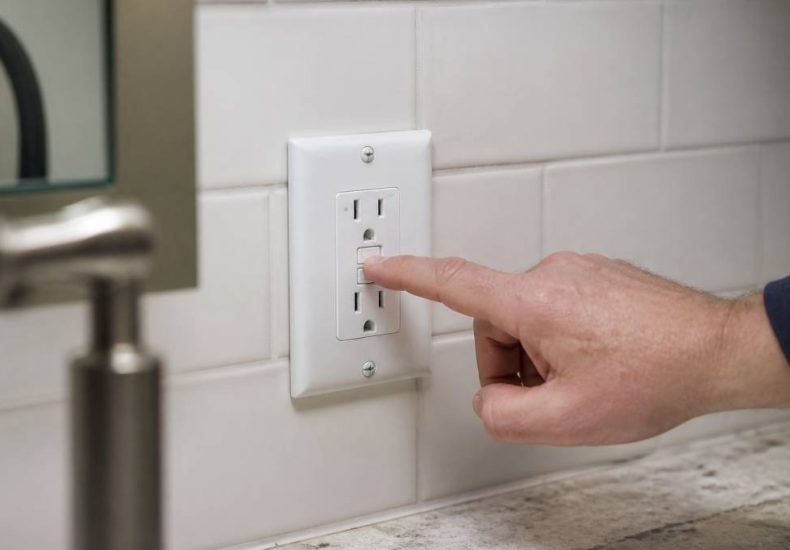
How a ground fault circuit interrupter works in modern home wiring
Few things in home wiring are as important as safety devices that work quietly in the background. A ground fault circuit interrupter, better known as a GFCI, is one of them. You probably know it as the outlet with the “Test” and “Reset” buttons. Simple on the outside, clever on the inside.
But how does it actually work? And why is it so common in kitchens, bathrooms, garages, basements, laundry areas, and outdoor circuits? If you’ve ever wondered what makes a GFCI different from a regular receptacle, this is the right place to start.
What a GFCI is designed to do
A GFCI is built to protect people from electric shock. Its job is not to stop overloads or short circuits—that’s the circuit breaker’s role. Instead, it watches for a very specific problem: current leaving the circuit on one conductor and not returning on the other in the exact same amount.
In a healthy circuit, electricity flows out on the hot wire and returns on the neutral wire. A GFCI compares the amount of current on both wires all the time. If it detects even a tiny mismatch, it assumes some current may be leaking through an unintended path, possibly through a person or a wet surface. Then it trips almost instantly.
That quick reaction is what makes it so valuable in modern home wiring. In many cases, a GFCI can shut off power in a fraction of a second—fast enough to help prevent a serious shock.
The basic idea behind how it works
The internal mechanism of a GFCI relies on a sensing coil, sometimes called a current transformer. The hot and neutral conductors pass through this coil. Under normal conditions, the magnetic fields they create cancel each other out because the current flowing out equals the current flowing back.
If something changes—say current leaks to ground through water, a damaged appliance, or a human body—the balance is broken. The coil senses the difference and triggers a small electronic relay inside the device. That relay opens the circuit and cuts power.
Think of it like a vigilant hallway monitor. It doesn’t care where the electricity is going unless the “in” and “out” counts don’t match. Then it acts immediately. No drama, no delay, just a fast trip to protect the circuit.
Why a tiny imbalance matters so much
You might ask: how small of a difference are we talking about? GFCIs used in homes typically trip when the imbalance reaches around 4 to 6 milliamps. That is a very small amount of current, but it can be enough to indicate a dangerous leakage path.
This threshold is low on purpose. The goal is not to wait until a major problem develops. The device is designed to react early, before current has time to do real harm.
That’s why a GFCI is especially useful in places where moisture and electricity tend to meet. Water lowers the body’s resistance, making shock risk higher. A bathroom sink, a basement concrete floor, a kitchen counter, or an outdoor outlet after rain all create conditions where extra protection makes sense.
GFCI protection versus standard circuit breakers
A regular breaker and a GFCI are not the same thing, and this is where homeowners sometimes get confused. A breaker protects wiring from overheating due to too much current. It trips when a circuit is overloaded or shorted.
A GFCI protects people from ground faults. It can trip even when the total current is far below the breaker’s rating. For example, a 20-amp circuit can still have a dangerous leakage of just a few milliamps and never overload the breaker. The breaker may stay perfectly calm while the GFCI says, “Nope, not today.”
That is why modern home wiring often uses both. The breaker handles the circuit’s overall safety. The GFCI handles shock protection in the locations most likely to expose people to water or grounding paths.
Where GFCIs are typically installed in a house
In many homes, GFCIs are required in specific areas because the risk of shock is higher. Common locations include:
- Bathrooms
- Kitchens
- Garages
- Basements and crawl spaces
- Laundry rooms
- Outdoor receptacles
- Utility sinks and wet bar areas
- Near pools, spas, and hot tubs
In some cases, a single GFCI outlet can protect other outlets downstream on the same circuit. That means one device may guard several receptacles, depending on how the circuit is wired. This can be efficient, but it also means you need to understand which outlet is feeding the others before assuming everything is protected.
How a GFCI outlet is wired
A GFCI receptacle has two sets of terminals: line and load. The line terminals connect to the incoming power from the breaker panel. The load terminals, if used, send protected power to downstream outlets or devices.
This is an important detail. If the incoming power is connected to the load side by mistake, the outlet may not work correctly. In many home wiring projects, this is one of the most common installation errors. The device may look fine, but it will either refuse to reset or fail to protect properly.
When wired correctly, the GFCI monitors all current leaving through the line and load conductors. If it detects imbalance anywhere downstream, it trips and disconnects power to everything it protects.
That makes installation accuracy essential. A GFCI is smart, but it is not psychic. It needs the wires in the right place to do its job.
What happens inside when it trips
Once the internal sensing circuit detects a fault, it energizes a trip mechanism. That mechanism opens a set of contacts, cutting power to the outlet and any protected downstream outlets. This happens very fast, often within milliseconds.
When the fault clears, the device does not turn itself back on. You have to press the Reset button manually. That is intentional. If the GFCI tripped because of a real problem—like a failing appliance, moisture in a box, or damaged wiring—it should not restart on its own and create the same hazard again.
The reset requirement is a simple but effective safety feature. It forces someone to check the situation instead of letting the circuit re-energize blindly.
Common reasons a GFCI trips
A tripping GFCI is often doing exactly what it was designed to do, but it can still be annoying if it happens repeatedly. Some common causes include:
- Moisture in the outlet or appliance
- A damaged cord or plug
- A failing motor or heating element
- Wiring errors in the circuit
- Neutral-to-ground faults downstream
- Worn-out GFCI devices
One real-world example: a homeowner plugs in a freezer in the garage, and every time it cycles on, the GFCI trips. The freezer may be aging and leaking current, or the outlet itself may be near damp concrete and picking up moisture. Sometimes the outlet is fine and the appliance is the problem. Sometimes it’s the reverse. Home wiring likes to keep people humble.
If a GFCI trips once after a rainstorm or after a spill, that may not be a mystery. But if it keeps tripping without an obvious cause, something should be investigated before it gets worse.
What a GFCI cannot protect against
GFCIs are excellent, but they are not magic shields. They do not prevent every electrical hazard. For example, they are not designed to protect against all overloads, arc faults, or equipment damage.
They also cannot help if someone is exposed to both hot and neutral conductors in a way that does not create an imbalance large enough to trip the device. That’s one reason modern home wiring often combines GFCIs with AFCI protection in some areas, depending on code requirements and circuit design.
So while a GFCI is a major safety tool, it is one part of a larger system. Good wiring practices, correct grounding, proper enclosures, and code-compliant installation all still matter.
Why the test button is important
Every GFCI has a Test button for a reason. Pressing it creates a controlled imbalance inside the device, simulating a fault. If the GFCI is working properly, it should trip immediately.
This test should be done regularly, usually monthly, to make sure the device is still responding as it should. Over time, electrical components can wear out. A GFCI can fail mechanically or electronically, and you may not know it unless you test it.
After testing, press Reset to restore power. If the device will not reset, that may indicate a wiring issue, a failed device, or a fault on the circuit. Either way, it deserves attention.
How GFCIs have changed modern home wiring
Modern wiring has become more protective and more layered than older residential systems. Decades ago, many homes had outlets in wet areas with no GFCI protection at all. That was common, but it was not ideal.
Today, GFCIs are standard in many locations because the cost and complexity are low compared with the safety benefit. A single device can protect a family in a bathroom, a kitchen, or a backyard patio. That is a pretty strong return on a small piece of hardware.
In new construction and renovations, GFCIs also help simplify code compliance in areas where shock risk is highest. For builders and remodelers, they are part of the baseline rather than an optional upgrade.
Practical tips for homeowners
If you’re dealing with GFCIs in your home, a few simple habits can save time and frustration:
- Test GFCIs regularly using the built-in buttons.
- Label downstream protected outlets if you know which ones they are.
- Keep outdoor receptacle covers closed when not in use.
- Do not ignore repeated trips.
- Replace damaged cords and appliances instead of bypassing protection.
- If an outlet won’t reset, check whether another device on the same circuit has a fault.
Another useful tip: if you’re remodeling, take notes on which outlets are fed through each GFCI. Future you will appreciate the map. So will the next person who has to troubleshoot the circuit at 8 p.m. with a flashlight in one hand.
Why proper installation matters so much
A GFCI is only as reliable as its installation. Loose connections, reversed line and load conductors, shared neutrals wired incorrectly, or damaged boxes can all interfere with performance. In modern home wiring, details matter.
That is especially true when multiple outlets are protected by one device. If one branch of the circuit is mislabeled or miswired, it may be hard to understand why the whole line is acting up. A careful installation prevents those headaches before they start.
For homeowners who are comfortable with electrical work, it is still wise to verify every step against the device markings and local code requirements. For larger projects, or anything involving older wiring, bringing in a licensed electrician is usually the safer move.
The bottom line on GFCI protection
A ground fault circuit interrupter works by constantly comparing the current leaving and returning on a circuit. When those two values do not match, even by a small amount, it assumes electricity may be leaking somewhere it should not. Then it trips quickly and cuts power.
That simple idea has saved countless people from shock in modern homes. Whether it is protecting a bathroom outlet, a garage freezer, or an outdoor patio receptacle, the GFCI is one of the most practical safety devices in residential wiring.
It may look like just another outlet with two buttons, but inside it is doing a serious job every second it stays energized. And in home building, the best safety devices are often the ones you hardly notice—until the day you really need them.