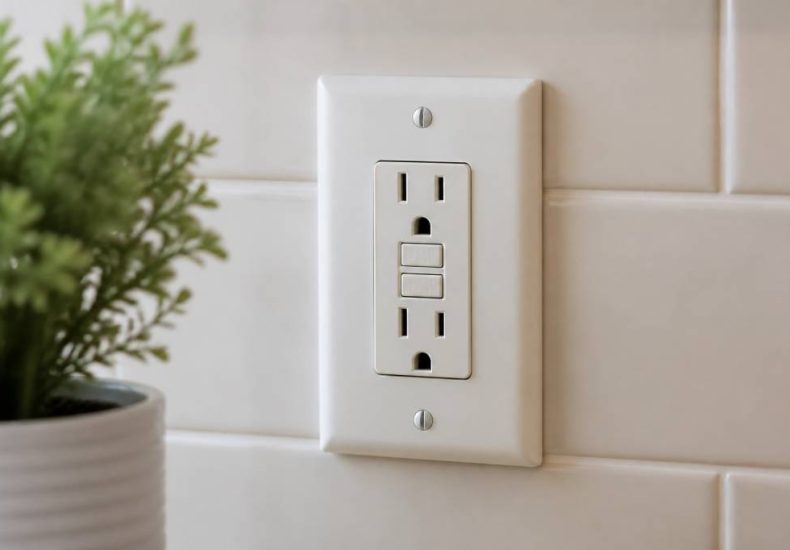
Gfci outlet how it works in home electrical safety
If you’ve ever stood in a bathroom, kitchen, garage, or outdoor outlet area and wondered why that oddly shaped receptacle has two little buttons labeled TEST and RESET, you’ve already met one of the most important safety devices in a home: the GFCI outlet.
GFCI stands for Ground Fault Circuit Interrupter. The name sounds technical, but the idea behind it is refreshingly simple: it helps protect people from electric shock by shutting off power fast when it detects electricity going where it shouldn’t. In a house, that can mean the difference between a harmless inconvenience and a dangerous accident.
For homeowners, DIYers, and anyone doing renovation work, understanding how a GFCI outlet works is not just useful—it’s essential. If you’re upgrading a kitchen, finishing a basement, or adding outdoor receptacles, this is one safety feature you don’t want to overlook.
What a GFCI outlet actually does
A standard outlet delivers power to whatever is plugged in. A GFCI outlet does that too, but it also constantly watches the flow of electricity. Think of it like a security guard standing at the door, checking that everything going in comes back out the way it should.
Electricity is supposed to travel out on the hot wire and return on the neutral wire. A GFCI outlet compares the current on those two wires. If it detects a difference—usually as small as 4 to 6 milliamps—it assumes some of the electricity may be escaping through an unintended path. That path could be water, a damaged appliance, a wet person, or a faulty wire.
When that happens, the GFCI trips almost instantly and cuts power. Fast enough, in many cases, to reduce the risk of a severe shock.
That’s the key point: a GFCI does not prevent electricity from flowing. It monitors the balance of current and interrupts it when the balance is off. That small detail is exactly what makes it so effective.
Why GFCI protection matters in the home
Electricity and water are not exactly a dream team. Bathrooms, kitchens, laundry rooms, garages, basements, crawl spaces, and outdoor areas all have one thing in common: moisture. And moisture increases shock risk.
Imagine plugging in a power tool in the garage while standing on a damp floor after washing the car. Or using a hair dryer near a bathroom sink. Or connecting holiday lights outside when the weather is less than ideal. These are everyday situations, not rare disasters.
GFCI protection is designed for those real-world moments. It’s a practical layer of defense that works quietly in the background until it’s needed.
Most modern building codes require GFCI protection in specific locations, and for good reason. It’s one of those upgrades that may not look exciting, but it can make a home much safer. Not bad for a device that costs less than many coffee orders.
How the trip mechanism works
Inside a GFCI outlet is a sensor that measures the current flowing through the hot and neutral wires. Under normal conditions, the amount should match. If a fault occurs, even a tiny one, the outlet detects an imbalance.
Here’s a simple example. If 10 amps leave the hot wire but only 9.995 amps return on the neutral wire, the GFCI notices that tiny difference. That missing 0.005 amp may be traveling through an unintended path—possibly through a person. The outlet then trips and shuts off power.
The reaction is fast, usually within a fraction of a second. That speed matters because the human body can be affected by very small amounts of current, especially if the path goes from hand to hand or hand to foot.
One important detail: a GFCI is designed to protect people, not equipment. It won’t necessarily stop every electrical problem, but it is very good at reducing shock risk in wet or exposed areas.
GFCI outlet versus standard breaker protection
Many homeowners assume the circuit breaker in the panel already handles every electrical safety issue. It doesn’t. A breaker protects the wiring from overloads and short circuits. A GFCI outlet protects people from ground faults and shock hazards.
That difference is easy to miss, but it matters. A breaker might trip when too many devices are drawing power on one circuit. A GFCI may trip even when the total load is low if it senses current leaking where it shouldn’t.
In short:
- A breaker helps prevent overheating and fire risks from too much current.
- A GFCI helps prevent electric shock by detecting current imbalance.
- Both are important, but they are not interchangeable.
In some homes, GFCI protection is provided at the outlet itself. In others, it may be built into the breaker at the electrical panel. Both methods can be effective when installed properly.
Where GFCI outlets are commonly used
Building codes vary by country and region, but in many homes, GFCIs are required in locations where water exposure is likely. Even when not strictly required, they’re often a smart upgrade.
Common places include:
- Bathrooms
- Kitchens, especially near sinks and countertops
- Garages
- Basements and crawl spaces
- Laundry rooms
- Outdoor outlets
- Near utility sinks
- Pool, spa, or hot tub areas
If your home is older, you may find standard outlets in some of these areas. That doesn’t necessarily mean the wiring is failing, but it does mean the safety setup may not match modern expectations. During a remodel, it’s a good time to update those receptacles.
What the TEST and RESET buttons do
These two little buttons are not decoration. They are there so you can check whether the GFCI is functioning properly.
The TEST button simulates a ground fault by creating a small imbalance in the circuit. When you press it, the outlet should trip and shut off power to the receptacle and, in some cases, other outlets downstream on the same circuit.
The RESET button restores power after the outlet has tripped.
A few useful points:
- If you press TEST and nothing happens, the outlet may be faulty or wired incorrectly.
- If the outlet trips but won’t reset, there may be a wiring issue, a connected appliance problem, or a fault somewhere on the circuit.
- Testing should be done regularly, not just once when you move in and forget about it for the next decade.
A practical habit is to test GFCI outlets every month or two. It takes about ten seconds and gives you a quick confidence check that the protection is still active.
How to tell if a GFCI outlet has tripped
Sometimes a GFCI trips and leaves you staring at an outlet wondering why half the room has gone dead. The signs are usually easy to spot once you know what to look for.
Common symptoms include:
- Devices suddenly losing power
- RESET button popping out or sitting proud of the faceplate
- Other outlets on the same circuit going dead
- Lights or appliances nearby no longer working
When that happens, check the GFCI outlet first. Press the RESET button firmly. If power returns, great. If it trips again immediately, something on the circuit may be causing the fault.
That “something” could be a damaged appliance, moisture in the outlet, loose wiring, or a failing device plugged into a nearby receptacle. In other words, don’t just keep pressing reset like you’re trying to win a game. Repeated tripping is a clue, not a challenge.
Common reasons a GFCI keeps tripping
Frequent tripping is usually the outlet doing its job. The real question is why it’s sensing an imbalance. A few common causes show up again and again in home projects.
- Moisture: Water in or around the outlet, especially in bathrooms, basements, and outdoor boxes.
- Faulty appliance: A plugged-in tool or device with internal leakage.
- Damaged wiring: Old insulation, loose connections, or nicked conductors.
- Wrong wiring: Line and load terminals mixed up during installation.
- Shared circuit issues: Problems elsewhere on the circuit affecting the GFCI.
If a GFCI trips once after a storm or after using a wet appliance, that may be normal. If it trips repeatedly with nothing unusual happening, it deserves attention.
Can a GFCI outlet protect other outlets?
Yes, and this is where things get especially useful in renovation work.
Many GFCI outlets have both LINE and LOAD terminals. The LINE side brings power into the GFCI. The LOAD side can send protected power onward to other outlets downstream on the same circuit.
That means one GFCI outlet can protect multiple receptacles if wired correctly. This is common in bathrooms, garages, and kitchen circuits where several outlets are grouped together.
But here’s the catch: if you accidentally wire the line and load backwards, the GFCI may not function as intended. The outlet might still appear normal, but the safety protection may be compromised. This is why careful wiring and testing matter.
GFCI outlet or GFCI breaker?
Both can provide ground fault protection, but they do it in different ways.
A GFCI outlet protects at the receptacle and possibly downstream outlets. A GFCI breaker protects the entire circuit from the electrical panel.
There’s no single answer for every situation. In some cases, a breaker is easier if you want one point of protection for multiple outlets. In other cases, a GFCI outlet makes more sense because it’s straightforward to replace and easy to access for testing.
For homeowners, the choice often comes down to the existing wiring layout, code requirements, and whether you’re doing a small upgrade or a larger electrical project.
Installation tips for DIY-minded homeowners
Replacing a receptacle with a GFCI outlet is a common DIY project, but it should only be done with care. Electricity rewards patience and punishes guesswork.
If you’re planning an installation, keep these points in mind:
- Turn off power at the breaker and verify the circuit is dead.
- Identify the line and load wires before connecting anything.
- Follow the manufacturer’s diagram carefully.
- Use a properly grounded box and correct wire gauge.
- Test the outlet after installation with the TEST and RESET buttons.
If the wiring in the box looks crowded, confusing, or older than the house itself, that’s a good moment to slow down and reassess. Electrical work is one area where “close enough” is not a useful strategy.
Myths people still believe about GFCI outlets
There are a few misconceptions that keep circulating around home projects.
Myth: A GFCI protects against lightning or power surges.
Reality: It doesn’t. That’s a job for surge protection equipment.
Myth: If one GFCI is installed, the entire home is protected.
Reality: Only the protected circuit or outlet is covered.
Myth: If the outlet looks normal, it must be working.
Reality: A GFCI can fail internally, which is why testing matters.
Myth: GFCIs are only needed in bathrooms.
Reality: Many other damp or exposed areas benefit from them too.
Why this matters during remodeling or new construction
If you’re working on a home renovation, GFCI protection should be part of the safety plan, not an afterthought. It’s far easier to install or upgrade receptacles while walls are open or trim is off than to retrofit later.
For new construction, GFCI placement is often built into the electrical plan from the start. For remodels, it’s a smart checkpoint during the rough-in or finishing stages. A few strategically placed outlets can dramatically improve safety without adding much complexity to the project.
And if you’re updating a kitchen, bathroom, basement, or exterior outlet, it’s worth reviewing the full circuit—not just the visible receptacle. Safety often depends on what’s behind the wall, not just the faceplate you see every day.
A simple habit that pays off
One of the easiest home safety routines you can build is testing your GFCI outlets regularly and replacing any that don’t trip or reset properly. It’s fast, cheap, and genuinely useful.
If an outlet is located in a high-risk area and you’re not sure whether it’s protected, that’s a good time to investigate before the next rainy day, plumbing leak, or damp-floor moment decides for you.
GFCI outlets may be small, but their role in home electrical safety is huge. They’re one of those behind-the-scenes devices that quietly reduce risk every day, especially in the places where electricity and moisture are most likely to meet.
For homeowners and DIYers, understanding how they work makes it easier to install them correctly, test them regularly, and recognize problems before they become serious. And in home electrical work, that kind of knowledge is worth a lot more than it costs.