
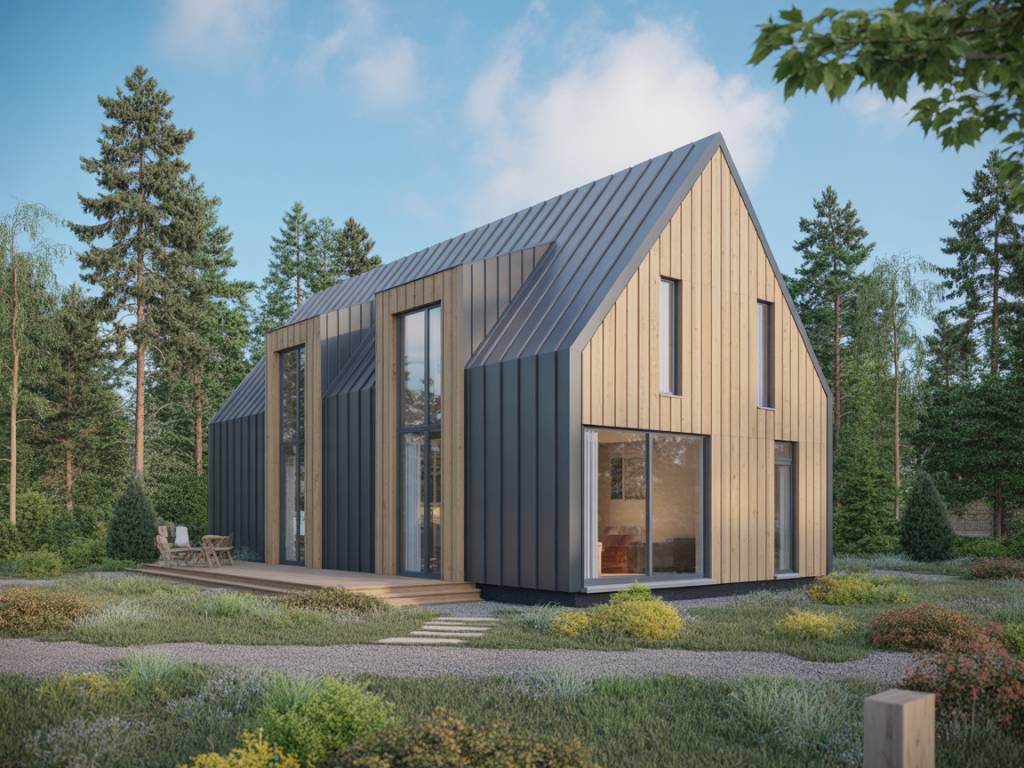
Why Climate-Resilient Home Design Matters for New Builds
Across the United States, new homes are facing a harsher climate reality. Heatwaves last longer. Wildfires reach further into suburban areas. Hurricanes intensify more quickly. Heavy rain events overwhelm drainage systems that once felt adequate. Building a climate-resilient home is no longer a niche concept. It is becoming a core strategy in modern residential construction.
For anyone planning a new build, designing for extreme weather is both a protective measure and a long-term investment. A climate-resilient home can reduce repair costs after storms, lower insurance premiums, improve comfort during heatwaves, and maintain property value in vulnerable regions. In many cases, resilient home design also overlaps with energy-efficient building and sustainable materials, supporting both durability and performance.
This article explores practical, construction-focused strategies to protect a new home from extreme weather, with a focus on the U.S. context and code environment. You will find specific design ideas, material choices, and layout decisions that can be implemented early in the planning phase, before the concrete is poured and walls are framed.
Understanding Your Local Climate Risks Before You Build
Climate-resilient home design starts with understanding local risk. A house built in coastal Florida faces challenges that look very different from a home in the Colorado foothills or a subdivision outside Phoenix.
When evaluating a building site, review these risk categories with your architect, builder, or engineer:
- Flooding and storm surge – FEMA flood maps, proximity to rivers, lakes, or the ocean, historical flood records, and recent “100-year” or “500-year” flood events.
- Wind and hurricanes – local wind speed design requirements, hurricane zones, tornado frequency, and exposure on open terrain.
- Wildfire risk – wildland–urban interface (WUI) mapping, vegetation type, historic fire behavior, local fire codes, and embers exposure.
- Extreme heat and cold – projected temperature trends, heat index days, freeze–thaw cycles, and winter storm frequency.
- Rain intensity and hail – short-duration heavy rainfall that stresses drainage, plus hail size trends affecting roofing and siding.
Combining public data from sources such as FEMA, NOAA, state climate offices, and local building departments with site-specific observations gives you a realistic picture of what your future home will face. The goal is to match climate-resilient design strategies to the most probable threats instead of designing in the dark.
Site Planning and Home Orientation for Climate Resilience
Good site planning is one of the most cost-effective ways to build a weather-resistant home. Many climate-related issues can be reduced or avoided by putting the house in the right place, at the right height, and facing the right direction.
Key strategies for climate-smart site design include:
- Elevating the home above flood levels – using raised slabs, pier foundations, or elevated crawl spaces in flood-prone areas. The target is usually above the Base Flood Elevation (BFE) plus a freeboard margin, as recommended by local codes and FEMA guidelines.
- Shaping the site for drainage – grading the lot so that water flows away from the foundation, integrating swales, French drains, or rain gardens, and ensuring downspouts discharge far from the home.
- Choosing safer building zones on the lot – avoiding low-lying corners, eroding slopes, or locations directly in the path of wildfire-prone canyons or prevailing storm winds.
- Orienting for solar gain and shading – using southern exposure in colder climates to capture winter sun, and larger roof overhangs, pergolas, or shade trees in hot climates to cut cooling loads.
Landscape design is also part of climate resilience. Properly placed fire-resistant plants, stone mulch instead of wood, and defensible space around the home can slow wildfire spread. Deciduous trees can shade windows in summer and allow in sunlight during winter, acting as passive climate-control tools.
Strengthening the Building Envelope Against Extreme Weather
The building envelope—roof, walls, foundation, windows, and doors—is the primary shield between your family and extreme weather. Climate-resilient homes treat the envelope as a system, rather than a series of disconnected components.
Roof systems for high wind, hail, and heavy rain
- Specify roofing materials rated for high wind and impact, such as impact-resistant asphalt shingles, standing seam metal roofing, or concrete/clay tiles appropriate to the region.
- Use a fully adhered roof underlayment or self-adhered membrane in hurricane or severe storm regions to protect the sheathing if shingles blow off.
- Reinforce roof-to-wall connections with hurricane clips or straps, ensuring a continuous load path from roof to foundation.
- Design roof slopes and overhangs to minimize uplift in high-wind zones, and specify robust gutter systems capable of handling cloudburst-level rainfall.
Wall assemblies and impact resistance
- Consider engineered wood panels, insulated concrete forms (ICFs), structural insulated panels (SIPs), or advanced framing techniques for increased racking resistance and energy performance.
- In wildfire zones, use non-combustible or ignition-resistant cladding such as fiber-cement siding, stucco, masonry, or metal, and avoid vented vinyl soffits that can admit embers.
- Seal the building envelope carefully with high-quality air and water barriers, tapes, and flashing systems to prevent moisture intrusion during wind-driven rain.
Windows, doors, and openings
- Specify impact-rated windows and doors in hurricane and tornado-prone regions, or plan for deployable storm shutters that are easy to operate quickly.
- Use multi-point locking systems on exterior doors to reduce blow-in risk during extreme winds.
- Choose high-performance glazing with low U-factors and appropriate solar heat gain coefficients (SHGC) to balance passive solar benefits and cooling loads in extreme heat.
- Design and screen attic and crawlspace vents to block embers in wildfire-prone areas while maintaining code-compliant ventilation.
Materials and Construction Methods for Long-Term Durability
Climate-resilient home construction goes beyond traditional “2×4 and drywall” methods. Materials are selected not just for aesthetics and cost but also for their ability to handle moisture, heat, fire, wind, and time.
Some commonly used durable and resilient materials include:
- Concrete and masonry systems – for foundations, stem walls, and in some regions, full wall systems that resist wind, fire, pests, and rot.
- Fiber-cement siding and trim – low maintenance, non-combustible, and more dimensionally stable than wood in humid or coastal areas.
- Metal roofing – highly durable, fire-resistant, lightweight, and often rated for high winds and hail.
- Engineered lumber and treated framing – better resistance to warping and decay, especially in humid climates or where termites are prevalent.
- Moisture-resistant drywall and sheathing – especially in basements, bathrooms, and coastal homes where humidity is persistent.
On-site workmanship is as important as material selection. Even the best products can fail if flashing is installed incorrectly, air barriers are punctured, or framing details do not comply with structural design. Working with contractors familiar with resilient home construction and local hazard-resistant codes (such as the International Residential Code wind and flood provisions or wildfire WUI standards) is essential.
Energy-Efficient and Passive Design Strategies That Support Resilience
Energy efficiency and climate resilience are closely linked. A home that maintains stable indoor temperatures during power outages gives its occupants more time and comfort during heatwaves, cold snaps, or storm-related outages.
Relevant strategies include:
- High-performance insulation and air sealing – continuous exterior insulation, well-installed cavity insulation, and tight air sealing reduce heat gain and loss, keeping the interior livable longer when mechanical systems are offline.
- Advanced window placement – balancing natural light with strategic shading to avoid overheating, especially on west- and south-facing elevations in hot climates.
- Cool roofs and reflective exterior finishes – minimizing heat absorption, especially in southern and southwestern states where roof temperatures can soar.
- Efficient HVAC systems with smart controls – right-sized equipment, high SEER heat pumps, and smart thermostats can reduce loads and integrate with backup power systems more effectively.
- Passive ventilation and stack effect – operable windows, vented clerestories, and well-designed airflow paths can improve comfort and indoor air quality when powered ventilation is unavailable.
Building certifications such as ENERGY STAR, LEED for Homes, or Passive House often incorporate many of these measures. While the primary focus is energy performance, the result is typically a home that also performs better during climate stress events.
Resilient Mechanical, Electrical, and Plumbing (MEP) Systems
In modern homes, the vulnerability of mechanical, electrical, and plumbing systems often reveals itself first during extreme weather. Designing these systems with resilience in mind can keep essential services functioning longer and make recovery faster.
- Elevated equipment – placing furnaces, heat pumps, tankless water heaters, and electrical panels above potential flood levels or in protected interior spaces.
- Back-up power solutions – integrating whole-house generators, battery storage systems, or solar PV plus storage to maintain critical loads such as refrigeration, medical devices, and communications.
- Sump pumps and backwater valves – preventing sewer backups and managing groundwater intrusion in basements and crawlspaces.
- Smart home monitoring – leak detection sensors, temperature alerts, and remote shutoff valves provide early warnings when you are away.
- Redundancy in critical systems – dual sump pumps, multiple heating sources in very cold climates, or separate circuits for critical appliances.
Designing MEP systems for resilience should happen during early planning, since equipment placement, conduit runs, and structural coordination are easier to address on paper than after framing is complete.
Interior Layout and Storage for Extreme Weather Preparedness
The interior design of a climate-resilient home is not just about style. Room layout and storage planning can directly affect how safely and comfortably a household rides out a storm, wildfire warning, or prolonged blackout.
- Designated safe rooms or interior refuges – interior rooms without windows on lower floors can serve as tornado or hurricane refuges. In some regions, reinforced safe rooms are integrated into new builds.
- Accessible emergency storage – pantry or utility spaces designed to store water, non-perishable food, first-aid kits, and backup lighting within easy reach.
- Flexible spaces – spare rooms or offices that can be converted into sleeping areas during extreme heat or cold, depending on where the house stays most comfortable.
- Durable interior finishes – moisture-resistant flooring in entryways and mudrooms, washable paints, and hard-wearing surfaces that can handle frequent cleaning after smoke, ash, or minor water intrusion.
These details are relatively low-cost compared to structural upgrades, yet they strongly influence day-to-day resilience and usability when the weather turns severe.
Balancing Cost, Codes, and Long-Term Value
Building a climate-resilient home in the United States requires balancing upfront cost, local building codes, and long-term benefits. Some resilience measures—such as upgrading roof attachments or using better underlayments—add modest costs with significant returns. Others, like whole-house backup power or impact-rated glazing throughout, represent larger investments.
To prioritize effectively, consider:
- Local hazard probabilities – invest most heavily in features that address your highest-likelihood, highest-impact events.
- Insurance incentives – some insurers offer discounts for fortified roofs, impact windows, or elevated foundations, partially offsetting costs.
- Resale value – as buyers become more climate-aware, homes marketed as “climate-resilient,” “hurricane-ready,” or “wildfire-hardened” may hold a competitive edge.
- Phased upgrades – design your home so that additional resilience features, such as solar plus storage or exterior shutters, can be added later without major reconstruction.
Engaging early with architects, structural engineers, and builders who have experience in climate-resilient residential construction will help align design decisions with realistic budgets and regional best practices. Ultimately, a well-planned, climate-resilient new build is not only a response to extreme weather but a thoughtful approach to comfort, safety, and durability for decades to come.